Orthogate Press
  • Orthogate Press
  • Musculoskeletal Medicine
    • Section 1 Biology
    • Section 2 Anatomy
    • Section 3 Disorders
    • Section 4 Clinical Evaluation
    • Section 5 Management
    • Figures
  • Deep Research
    • Hand & Upper Extremity
    • Joint Arthroplasty
    • Pediatric Orthopaedics
    • Professionalism & Ethics
    • Sports Medicine
    • Spine Surgery
    • Trauma & Fracture Management
  • Musculoskeletal Insights
  • About Us
  • Return to Orthogate
    • News
    • Events
    • Forums
    • Reviews
    • Videos
    • Academy
    • Articles
    • Resources
    • For Patients
  • Click to open the search input field Click to open the search input field Search
  • Menu Menu
  • Link to X
  • Link to Facebook
  • Link to LinkedIn
  • Link to Rss this site
  • Orthogate Press
  • Musculoskeletal Medicine
  • Musculoskeletal Medicine Figures
  • Deep Research
  • Musculoskeletal Insights
  • About Us
  • Return to Orthogate
Musculoskeletal Insights
You are here: Home1 / Musculoskeletal Insights2 / Musculoskeletal Medicine3 / Clinical Evaluation4 / Chapter 27 Radiography

Chapter 27 Radiography
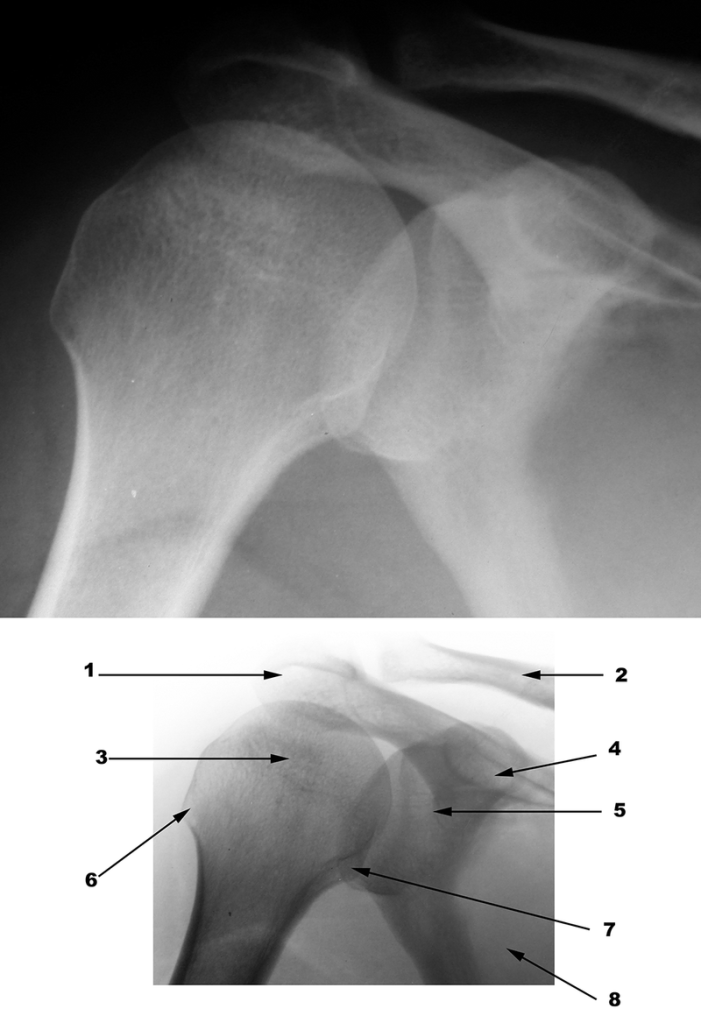
Clinical Evaluation, Musculoskeletal Medicine, OER Spotlight

Shining a Light on Bones: Understanding the Power of Radiography

Have you ever wondered what goes on behind the scenes when a doctor orders an X-ray? This chapter dives into the fascinating world of radiography, the technology that allows us to “see” inside the human body without making a single incision.

What is Radiography?

At its core, radiography uses high-energy electromagnetic radiation (X-rays) to create images of our internal structures. Think of it like shining a flashlight through your hand – the light passes through, but denser objects cast shadows. In radiography, these shadows reveal the intricate details of our bones and tissues.

The Magic of Radiographs:

Radiographs, or X-ray films, are like maps of our inner landscape. Dense materials, such as bone, appear bright, while less dense materials, like gas, appear dark. This contrast allows medical professionals to identify a range of conditions, from fractures and dislocations to arthritis and even tumors.

Why Radiography Matters:

  • A Window to the Bones: Radiography is often the first line of defense when doctors suspect a bone injury. It provides a clear picture of bone lesions, making it essential for diagnosis and treatment planning.
  • More Than Just Bones: While radiography excels at imaging bones, it also offers insights into other tissues. However, it has limitations when it comes to soft tissues like muscles and ligaments.
  • A 2D View of a 3D World: One of the challenges of radiography is that it captures a 2D image of a 3D structure. This is why multiple views are often necessary to get a complete picture.
  • Guiding the Way: Radiographs often serve as a roadmap for more advanced imaging studies, such as CT scans or MRIs.

Regional Radiographic Anatomy:

The chapter explores radiographic anatomy by region, providing a detailed look at how different parts of the body appear in X-rays. From the shoulder and arm to the foot and ankle, each region has its own unique radiographic characteristics. The chapter also covers the different views and techniques used to capture the best possible images of each area.

Common Pathologies:

The final section of the chapter delves into common musculoskeletal conditions that are clearly visible on radiographs. Fractures, dislocations, arthritis, and tumors are just some of the pathologies that can be identified using this powerful imaging technique.

The Takeaway:

Radiography is a vital tool in modern medicine, providing a non-invasive way to visualize the inner workings of the human body. While it has its limitations, it remains an essential diagnostic technique for a wide range of musculoskeletal conditions. So, the next time you or a loved one needs an X-ray, remember the fascinating science behind this everyday medical procedure!
Goto Chapter 27 Radiography
February 23, 2025/by Orthogate Press
Tags: Bone, dislocation, Fracture, Osteoarthritis, Osteomyelitis, osteoporosis, Radiography, Radiolucent, Radiopaque, X-rays
Share this entry
  • Share on X
  • Share on X
  • Share on LinkedIn
https://www.orthogate.org/press/wp-content/uploads/2025/02/radiography.webp 1176 800 Orthogate Press https://orthogate.org/press/wp-content/uploads/2017/09/Orthogate_72-300x76.png Orthogate Press2025-02-23 16:45:052025-02-23 17:49:10Chapter 27 Radiography
You might also like
Shoulder Arthroplasty Implants: An Analysis of Types, Indications, and Selection Factors Shoulder Arthroplasty Implant Selection
PRP therapy for sports injuries
Chapter 1 Bone
Chapter 12 Infection
Meniscal Repair vs. Meniscectomy Outcomes
Chapter 24 Special Concerns of the Pediatric Patient

Musculoskeletal Insights

  • Musculoskeletal Insights
    • OER Spotlight
    • Updates and Advancements
    • Community Engagement
    • Educational Resources and Tools

Deep Research

  • Deep Research
    • Joint Arthroplasty
    • Hand & Upper Extremity
    • Pediatric Orthopaedics
    • Professionalism & Ethics
    • Spine Surgery
    • Sports Medicine
    • Trauma & Fracture Management

LATEST ARTICLES

  • Wrist Ligament Injuries: Diagnosis and Management
    Wrist Ligament Injuries: Diagnosis, ManagementJuly 1, 2025 - 9:00 amin: Hand & Upper Extremity – Restoring Function and Dexterity
  • Common Nerve Injuries of the Upper Extremity: Diagnosis and Repair
    Upper Extremity Nerve InjuriesJuly 1, 2025 - 9:00 amin: Hand & Upper Extremity – Restoring Function and Dexterity
  • Peripheral Nerve Entrapment Syndromes in the Upper Extremity: Diagnosis and Management
    Upper Extremity Nerve Entrapment SyndromesJuly 1, 2025 - 9:00 amin: Hand & Upper Extremity – Restoring Function and Dexterity
  • Trigger Finger: Diagnosis and Treatment
    Trigger finger: diagnosis and treatmentJuly 1, 2025 - 9:00 amin: Hand & Upper Extremity – Restoring Function and Dexterity
  • Total Elbow Arthroplasty: A Comprehensive Review
    Total Elbow Arthroplasty ReviewJuly 1, 2025 - 9:00 amin: Hand & Upper Extremity – Restoring Function and Dexterity

About Orthogate Press

Orthogate Press operates on the model of a knowledge-based economy, to which we contribute by providing peer-reviewed publications unfettered by the desire to commodify thought or to restrict access to ideas.

We are dedicated to the dissemination of knowledge and research through open access digital journals and monographs, as well as through new electronic media. Learn more about Orthogate Press.

Latest Articles

  • Chapter 33 Surgical TreatmentsFebruary 23, 2025 - 4:47 pm
  • Chapter 32 Alternative MedicineFebruary 23, 2025 - 4:47 pm
  • Chapter 31 MedicationsFebruary 23, 2025 - 4:46 pm
  • Chapter 30 Nonsurgical TherapyFebruary 23, 2025 - 4:46 pm
  • Chapter 29 Electrodiagnostic StudiesFebruary 23, 2025 - 4:45 pm

Categories

Anatomy (1) Biology (7) Clinical Evaluation (4) Deep Research (0) Disorders (17) Hand & Upper Extremity – Restoring Function and Dexterity (29) Joint Arthroplasty – Balancing Innovation and Evidence (20) Management (4) Musculoskeletal Medicine (33) OER Spotlight (33) Sports Medicine – Pushing the Boundaries of Performance and Recovery (20) Updates and Advancements (1)

RSS Orthogate Feed

  • Duke Orthopaedics Research Assistant - Immediate Opening July 20, 2026
  • Carilion Clinic - Virginia Tech Carilion School of Medicine - Adult Reconstructive Surgery Fellowship - Vacancy for AY 27-28 May 7, 2026
  • Orthopaedic House Physician Position Available in Manhattan - New York-Presbyterian/Lower Manhattan Hospital March 27, 2026
  • 2026–2027 Boucher Orthopaedic Trauma Research Fellowship - Johns Hopkins March 21, 2026
  • Department of Orthopedic Surgery, Division of Shoulder Surgery, The Johns Hopkins University Research Gap Year: 2026-2027 March 18, 2026
© Copyright 1999-2025 Orthogate. All rights reserved. . Powered by: OrthoNet | Dr. Christian Veillette - Empowering the Future of Orthopaedic Care
  • Terms of Service
  • Legal notice
Link to: Chapter 26 Physical Examination Link to: Chapter 26 Physical Examination Chapter 26 Physical ExaminationLink to: Chapter 28 Special Imaging Studies Link to: Chapter 28 Special Imaging Studies Chapter 28 Special Imaging Studies
Scroll to top Scroll to top Scroll to top