Orthogate Press
  • Orthogate Press
  • Musculoskeletal Medicine
    • Section 1 Biology
    • Section 2 Anatomy
    • Section 3 Disorders
    • Section 4 Clinical Evaluation
    • Section 5 Management
    • Figures
  • Deep Research
    • Hand & Upper Extremity
    • Joint Arthroplasty
    • Pediatric Orthopaedics
    • Professionalism & Ethics
    • Sports Medicine
    • Spine Surgery
    • Trauma & Fracture Management
  • Musculoskeletal Insights
  • About Us
  • Return to Orthogate
    • News
    • Events
    • Forums
    • Reviews
    • Videos
    • Academy
    • Articles
    • Resources
    • For Patients
  • Click to open the search input field Click to open the search input field Search
  • Menu Menu
  • Link to X
  • Link to Facebook
  • Link to LinkedIn
  • Link to Rss this site
  • Orthogate Press
  • Musculoskeletal Medicine
  • Musculoskeletal Medicine Figures
  • Deep Research
  • Musculoskeletal Insights
  • About Us
  • Return to Orthogate
Musculoskeletal Insights
You are here: Home1 / Musculoskeletal Insights2 / Musculoskeletal Medicine3 / Biology4 / Chapter 3 Synovial Tissue

Chapter 3 Synovial Tissue

Biology, Musculoskeletal Medicine, OER Spotlight

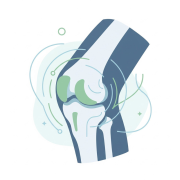
This chapter discusses synovial tissue, which is found in joints, tendon sheaths, and bursae and facilitates smooth motion. The synovium, a membranous structure, lines these areas and produces synovial fluid, which is crucial for motion and metabolism. The chapter covers the physiology, histology, and anatomy of normal synovium and synovial fluid, and then explores various pathologic conditions that can affect the synovium.

The physiologic function of the synovium is to secrete fluid, allowing smooth passage of tendons and decreasing friction in joints, tendon sheaths, and bursae. Synovial joints have opposing surfaces covered with articular cartilage and are enclosed by a capsule lined with synovium. This structure creates a pouch containing synovial fluid. The synovium also surrounds intra-articular ligaments and tendons.

Histologically, the synovium consists of type A synoviocytes (macrophage-like) and type B synoviocytes (fibroblastic). Type A cells remove debris, while type B cells secrete hyaluronic acid. Grossly, the synovium is two to four cell layers thick and has a large surface area due to villi and microvilli. It is supported by a rich vascular network and other cells.

Synovial fluid is a clear, straw-colored fluid formed by the filtration of capillary plasma. It contains electrolytes and glucose in similar concentrations to plasma, but has lower concentrations of large molecules and proteins. The fluid’s viscosity is dependent on the concentration of hyaluronic acid.

The chapter also discusses various conditions affecting the synovium. Synovitis, or inflammation of the synovial lining, can be caused by inflammatory or noninflammatory joint diseases. Examples of inflammatory diseases include bacterial septic arthritis and rheumatoid arthritis (RA). Noninflammatory diseases include osteoarthritis (OA). The chapter also details effusions, which are collections of synovial fluid that occur in both inflammatory and noninflammatory states.

Finally, the chapter touches on benign synovial tumors such as pigmented villonodular synovitis (PVNS) and primary synovial chondromatosis, and ongoing research areas like synovial supplementation and the etiology of RA.
Goto Chapter 3 Synovial Tissue
February 16, 2025/by Orthogate Press
Tags: arthritis, cartilage, effusion, hemarthrosis, inflammation, joints, synovial fluid, Synovial tissue, Synovitis
Share this entry
  • Share on X
  • Share on X
  • Share on LinkedIn
https://www.orthogate.org/press/wp-content/uploads/2025/02/synovial-tissue.webp 610 800 Orthogate Press https://orthogate.org/press/wp-content/uploads/2017/09/Orthogate_72-300x76.png Orthogate Press2025-02-16 15:11:212025-02-23 17:53:26Chapter 3 Synovial Tissue
You might also like
Meniscal Repair vs. Meniscectomy Outcomes
Hip Labral Tear Diagnosis, Surgery
Chapter 7 Inflammation
Elbow Arthroscopy: A Comprehensive Review of Indications, Outcomes, and Comparison to Open Surgery Elbow Arthroscopy: Indications and Outcomes
Chapter 4 Ligaments
De Quervain's Tenosynovitis: A Comprehensive Review of Diagnosis and Treatment De Quervain’s Tenosynovitis: Diagnosis, Treatment

Musculoskeletal Insights

  • Musculoskeletal Insights
    • OER Spotlight
    • Updates and Advancements
    • Community Engagement
    • Educational Resources and Tools

Deep Research

  • Deep Research
    • Joint Arthroplasty
    • Hand & Upper Extremity
    • Pediatric Orthopaedics
    • Professionalism & Ethics
    • Spine Surgery
    • Sports Medicine
    • Trauma & Fracture Management

LATEST ARTICLES

  • Wrist Ligament Injuries: Diagnosis and Management
    Wrist Ligament Injuries: Diagnosis, ManagementJuly 1, 2025 - 9:00 amin: Hand & Upper Extremity – Restoring Function and Dexterity
  • Common Nerve Injuries of the Upper Extremity: Diagnosis and Repair
    Upper Extremity Nerve InjuriesJuly 1, 2025 - 9:00 amin: Hand & Upper Extremity – Restoring Function and Dexterity
  • Peripheral Nerve Entrapment Syndromes in the Upper Extremity: Diagnosis and Management
    Upper Extremity Nerve Entrapment SyndromesJuly 1, 2025 - 9:00 amin: Hand & Upper Extremity – Restoring Function and Dexterity
  • Trigger Finger: Diagnosis and Treatment
    Trigger finger: diagnosis and treatmentJuly 1, 2025 - 9:00 amin: Hand & Upper Extremity – Restoring Function and Dexterity
  • Total Elbow Arthroplasty: A Comprehensive Review
    Total Elbow Arthroplasty ReviewJuly 1, 2025 - 9:00 amin: Hand & Upper Extremity – Restoring Function and Dexterity

About Orthogate Press

Orthogate Press operates on the model of a knowledge-based economy, to which we contribute by providing peer-reviewed publications unfettered by the desire to commodify thought or to restrict access to ideas.

We are dedicated to the dissemination of knowledge and research through open access digital journals and monographs, as well as through new electronic media. Learn more about Orthogate Press.

Latest Articles

  • Chapter 33 Surgical TreatmentsFebruary 23, 2025 - 4:47 pm
  • Chapter 32 Alternative MedicineFebruary 23, 2025 - 4:47 pm
  • Chapter 31 MedicationsFebruary 23, 2025 - 4:46 pm
  • Chapter 30 Nonsurgical TherapyFebruary 23, 2025 - 4:46 pm
  • Chapter 29 Electrodiagnostic StudiesFebruary 23, 2025 - 4:45 pm

Categories

Anatomy (1) Biology (7) Clinical Evaluation (4) Deep Research (0) Disorders (17) Hand & Upper Extremity – Restoring Function and Dexterity (29) Joint Arthroplasty – Balancing Innovation and Evidence (20) Management (4) Musculoskeletal Medicine (33) OER Spotlight (33) Sports Medicine – Pushing the Boundaries of Performance and Recovery (20) Updates and Advancements (1)

RSS Orthogate Feed

  • Duke Orthopaedics Research Assistant - Immediate Opening July 20, 2026
  • Carilion Clinic - Virginia Tech Carilion School of Medicine - Adult Reconstructive Surgery Fellowship - Vacancy for AY 27-28 May 7, 2026
  • Orthopaedic House Physician Position Available in Manhattan - New York-Presbyterian/Lower Manhattan Hospital March 27, 2026
  • 2026–2027 Boucher Orthopaedic Trauma Research Fellowship - Johns Hopkins March 21, 2026
  • Department of Orthopedic Surgery, Division of Shoulder Surgery, The Johns Hopkins University Research Gap Year: 2026-2027 March 18, 2026
© Copyright 1999-2025 Orthogate. All rights reserved. . Powered by: OrthoNet | Dr. Christian Veillette - Empowering the Future of Orthopaedic Care
  • Terms of Service
  • Legal notice
Link to: Chapter 2 Articular Cartilage Link to: Chapter 2 Articular Cartilage Chapter 2 Articular CartilageLink to: Chapter 4 Ligaments Link to: Chapter 4 Ligaments Chapter 4 Ligaments
Scroll to top Scroll to top Scroll to top