Orthogate Press
  • Orthogate Press
  • Musculoskeletal Medicine
    • Section 1 Biology
    • Section 2 Anatomy
    • Section 3 Disorders
    • Section 4 Clinical Evaluation
    • Section 5 Management
    • Figures
  • Deep Research
    • Hand & Upper Extremity
    • Joint Arthroplasty
    • Pediatric Orthopaedics
    • Professionalism & Ethics
    • Sports Medicine
    • Spine Surgery
    • Trauma & Fracture Management
  • Musculoskeletal Insights
  • About Us
  • Return to Orthogate
    • News
    • Events
    • Forums
    • Reviews
    • Videos
    • Academy
    • Articles
    • Resources
    • For Patients
  • Click to open the search input field Click to open the search input field Search
  • Menu Menu
  • Link to X
  • Link to Facebook
  • Link to LinkedIn
  • Link to Rss this site
  • Orthogate Press
  • Musculoskeletal Medicine
  • Musculoskeletal Medicine Figures
  • Deep Research
  • Musculoskeletal Insights
  • About Us
  • Return to Orthogate
Musculoskeletal Insights
You are here: Home1 / Musculoskeletal Insights2 / Musculoskeletal Medicine3 / Disorders4 / Chapter 15 Fracture

Chapter 15 Fracture

Disorders, Musculoskeletal Medicine, OER Spotlight

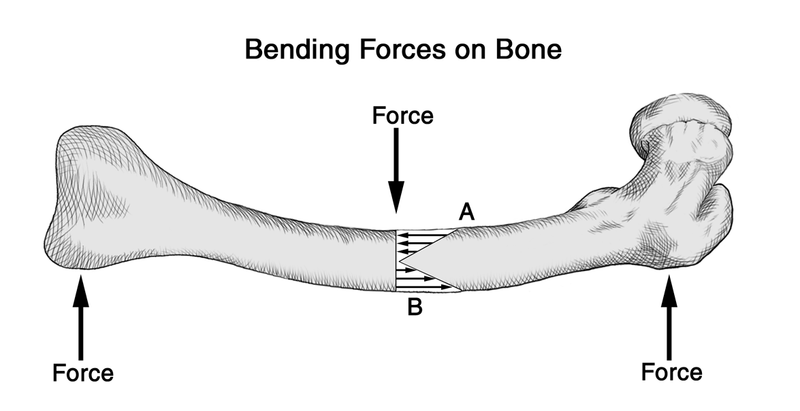
Fractures are more than just broken bones; they’re a complex medical issue with a wide range of causes, effects, and treatments. This chapter offers a comprehensive overview of fractures, starting with the basics of how and why they occur. Bones break when subjected to forces greater than their mechanical tolerance, with factors like bone strength, force magnitude, direction, and application rate all playing a role. The chapter also emphasizes the importance of proper terminology when describing fractures, advocating for detailed descriptions that match radiographic findings over eponyms or classification numbers.

Different types of fractures exist, each with its own characteristics and implications. The location, pattern, and displacement of a fracture, as well as the condition of the surrounding soft tissues, all contribute to the diagnosis and treatment plan. The chapter provides detailed descriptions of various fracture patterns, such as transverse, oblique, spiral, and comminuted fractures, and explains how these patterns can offer insights into the mechanism of injury.

Understanding how bones heal is crucial in fracture management. The chapter outlines the two main types of bone healing: primary and secondary. Primary healing, which is rare and usually requires surgical intervention, involves the direct deposition of new bone across the fracture. Secondary healing, the more common type, involves the formation of a cartilage scar that ossifies and remodels into normal bone. The chapter also touches on the exciting advancements in fracture healing research, such as the study of growth factors and gene expression.

Clinical evaluation of fractures involves a thorough physical examination and imaging studies. The chapter stresses the importance of prioritizing life-threatening injuries before addressing musculoskeletal issues. It also provides an overview of various treatment options, including casting, surgery, and traction, along with their respective advantages and disadvantages. The chapter concludes with a discussion of potential complications, such as thrombosis, fat embolism syndrome, and compartment syndromes, and emphasizes the importance of considering the psychosocial impact of fractures on patients.
Goto Chapter 15 Fracture
February 23, 2025/by Orthogate Press
Tags: Bone Healing, Closed Fracture, Comminuted Fracture, Fracture, Greenstick Fracture, Oblique Fracture, Open Fracture, Spiral Fracture, Torus Fracture, Transverse Fracture
Share this entry
  • Share on X
  • Share on X
  • Share on LinkedIn
https://www.orthogate.org/press/wp-content/uploads/2025/02/fracture-3.webp 411 800 Orthogate Press https://orthogate.org/press/wp-content/uploads/2017/09/Orthogate_72-300x76.png Orthogate Press2025-02-23 16:39:572025-02-23 17:51:16Chapter 15 Fracture
You might also like
Chapter 28 Special Imaging Studies
Chapter 33 Surgical Treatments
Chapter 22 Soft-Tissue Trauma
Chapter 27 Radiography
Chapter 14 Musculoskeletal Aspects of Trauma

Musculoskeletal Insights

  • Musculoskeletal Insights
    • OER Spotlight
    • Updates and Advancements
    • Community Engagement
    • Educational Resources and Tools

Deep Research

  • Deep Research
    • Joint Arthroplasty
    • Hand & Upper Extremity
    • Pediatric Orthopaedics
    • Professionalism & Ethics
    • Spine Surgery
    • Sports Medicine
    • Trauma & Fracture Management

LATEST ARTICLES

  • Wrist Ligament Injuries: Diagnosis and Management
    Wrist Ligament Injuries: Diagnosis, ManagementJuly 1, 2025 - 9:00 amin: Hand & Upper Extremity – Restoring Function and Dexterity
  • Common Nerve Injuries of the Upper Extremity: Diagnosis and Repair
    Upper Extremity Nerve InjuriesJuly 1, 2025 - 9:00 amin: Hand & Upper Extremity – Restoring Function and Dexterity
  • Peripheral Nerve Entrapment Syndromes in the Upper Extremity: Diagnosis and Management
    Upper Extremity Nerve Entrapment SyndromesJuly 1, 2025 - 9:00 amin: Hand & Upper Extremity – Restoring Function and Dexterity
  • Trigger Finger: Diagnosis and Treatment
    Trigger finger: diagnosis and treatmentJuly 1, 2025 - 9:00 amin: Hand & Upper Extremity – Restoring Function and Dexterity
  • Total Elbow Arthroplasty: A Comprehensive Review
    Total Elbow Arthroplasty ReviewJuly 1, 2025 - 9:00 amin: Hand & Upper Extremity – Restoring Function and Dexterity

About Orthogate Press

Orthogate Press operates on the model of a knowledge-based economy, to which we contribute by providing peer-reviewed publications unfettered by the desire to commodify thought or to restrict access to ideas.

We are dedicated to the dissemination of knowledge and research through open access digital journals and monographs, as well as through new electronic media. Learn more about Orthogate Press.

Latest Articles

  • Chapter 33 Surgical TreatmentsFebruary 23, 2025 - 4:47 pm
  • Chapter 32 Alternative MedicineFebruary 23, 2025 - 4:47 pm
  • Chapter 31 MedicationsFebruary 23, 2025 - 4:46 pm
  • Chapter 30 Nonsurgical TherapyFebruary 23, 2025 - 4:46 pm
  • Chapter 29 Electrodiagnostic StudiesFebruary 23, 2025 - 4:45 pm

Categories

Anatomy (1) Biology (7) Clinical Evaluation (4) Deep Research (0) Disorders (17) Hand & Upper Extremity – Restoring Function and Dexterity (29) Joint Arthroplasty – Balancing Innovation and Evidence (20) Management (4) Musculoskeletal Medicine (33) OER Spotlight (33) Sports Medicine – Pushing the Boundaries of Performance and Recovery (20) Updates and Advancements (1)

RSS Orthogate Feed

  • Duke Orthopaedics Research Assistant - Immediate Opening July 20, 2026
  • Carilion Clinic - Virginia Tech Carilion School of Medicine - Adult Reconstructive Surgery Fellowship - Vacancy for AY 27-28 May 7, 2026
  • Orthopaedic House Physician Position Available in Manhattan - New York-Presbyterian/Lower Manhattan Hospital March 27, 2026
  • 2026–2027 Boucher Orthopaedic Trauma Research Fellowship - Johns Hopkins March 21, 2026
  • Department of Orthopedic Surgery, Division of Shoulder Surgery, The Johns Hopkins University Research Gap Year: 2026-2027 March 18, 2026
© Copyright 1999-2025 Orthogate. All rights reserved. . Powered by: OrthoNet | Dr. Christian Veillette - Empowering the Future of Orthopaedic Care
  • Terms of Service
  • Legal notice
Link to: Chapter 14 Musculoskeletal Aspects of Trauma Link to: Chapter 14 Musculoskeletal Aspects of Trauma Chapter 14 Musculoskeletal Aspects of TraumaLink to: Chapter 16 Musculoskeletal Emergencies Link to: Chapter 16 Musculoskeletal Emergencies Chapter 16 Musculoskeletal Emergencies
Scroll to top Scroll to top Scroll to top