Shoulder Instability: Arthroscopic vs. Open Surgery
Shoulder Instability: A Comprehensive Review of Arthroscopic and Open Surgical Techniques
Shoulder instability, often caused by traumatic events or repetitive overhead motions, can significantly impact an individual’s quality of life. When conservative treatments, such as activity modification 1, fail to provide relief, surgical intervention becomes necessary to restore stability and function to the shoulder joint. This article delves into the intricacies of arthroscopic and open surgical techniques employed in addressing shoulder instability, with a particular focus on labral repair and capsular reconstruction.
Understanding Shoulder Instability
The shoulder, characterized by its remarkable range of motion, is inherently susceptible to instability. This instability arises when the supporting structures of the shoulder joint — including the labrum (a ring of cartilage that stabilizes the joint), ligaments, and tendons — are compromised2. These structures work in concert to maintain the humeral head (the ball of the upper arm bone) within the glenoid (the socket of the shoulder blade)3. Damage to these tissues, often resulting from a forceful dislocation or repetitive overhead activities, can lead to recurrent subluxations (partial dislocations) or dislocations, causing pain, limited mobility, and functional impairment4.
Shoulder instability is commonly grouped based on the direction of humeral head displacement: anterior (forward), posterior (backward), or multidirectional (front, back, and bottom)5. It’s important to distinguish between normal laxity, which varies between individuals, and instability, an abnormal condition characterized by pain, discomfort, and excessive humeral head translation5. Individuals experiencing persistent shoulder pain, particularly after an injury or with feelings of instability, should consult a doctor to determine the cause and appropriate treatment3.
Arthroscopic Surgical Techniques
Arthroscopic surgery has revolutionized the treatment of shoulder instability, offering a minimally invasive approach with numerous advantages over traditional open surgery3. This technique involves inserting a small camera (arthroscope) and specialized instruments through tiny incisions around the shoulder joint. The arthroscope provides a magnified view of the joint’s internal structures, allowing surgeons to precisely diagnose and repair the damaged tissues6. Notably, shoulder arthroscopy can be used to address a wide range of shoulder problems, not just instability, making it a versatile surgical tool7.
Labral Repair
Labral tears, frequently associated with shoulder instability, involve damage to the ring of cartilage that lines the glenoid socket. Arthroscopic labral repair aims to reattach the torn labrum to the glenoid rim, restoring stability to the joint8. Non-surgical treatment options for labral tears include painkillers, anti-inflammatory medications, physical therapy, and rest9. However, if these conservative measures fail to alleviate symptoms, surgical intervention may be necessary.
Arthroscopic labral repair typically involves the following steps:
- Joint Examination: The surgeon inserts the arthroscope into the shoulder joint to visualize the labrum and assess the extent of the tear10.
- Tissue Preparation: Any damaged or frayed edges of the labrum are trimmed and prepared for reattachment10.
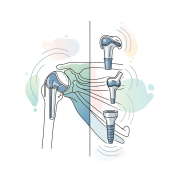
- Anchor Placement: Small anchors, typically made of biocompatible materials, are inserted into the glenoid bone at the site of the labral tear11.
- Suture Fixation: Sutures attached to the anchors are passed through the torn labrum and tied, securing the labrum back to the glenoid rim11.
Capsular Reconstruction
In cases of significant capsular laxity (loosening of the joint capsule), capsular reconstruction may be necessary to restore shoulder stability. This procedure involves tightening or reconstructing the joint capsule, which is the fibrous sac that encloses the shoulder joint. Arthroscopic capsular reconstruction techniques, such as capsular plication, involve folding and suturing the capsule to reduce its volume and enhance stability12.
Superior capsular reconstruction (SCR) is a specific technique used for irreparable rotator cuff tears13. This procedure involves attaching a graft, often from the patient’s own fascia lata (a thick band of tissue on the outer thigh), to reinforce the superior capsule and improve shoulder stability14. SCR is indicated when the rotator cuff tear is too extensive to be repaired directly, and the patient meets specific criteria, such as having minimal humeral head migration and intact teres minor and subscapularis muscles13.
Open Surgical Techniques
While arthroscopic surgery is often preferred for its minimally invasive nature, open surgery may be necessary in certain situations, such as:
- Extensive bone loss: When a significant portion of the glenoid bone is lost due to repeated dislocations, open surgery may be required to reconstruct the socket2.
- Chronic instability: In cases of long-standing shoulder instability, open surgery may provide more robust stabilization2.
- Failed arthroscopic repair: If a previous arthroscopic procedure has failed to adequately stabilize the shoulder, open surgery may be considered15.
Open surgery has a higher success rate than arthroscopic surgery, especially for patients with multiple dislocations or those involved in high-level contact sports16. This is because open surgery allows for more extensive access to the joint and a more secure repair.
Labral Repair
Open labral repair involves a larger incision to directly access and repair the torn labrum. This approach allows for more extensive visualization and manipulation of the tissues, which may be beneficial in complex cases8.
Capsular Reconstruction
Open capsular reconstruction techniques, such as the capsular shift procedure, involve tightening the joint capsule by overlapping and suturing the loose tissue6. This procedure is often performed in conjunction with other open procedures, such as the Latarjet procedure3.
The Latarjet procedure involves transferring a piece of bone (the coracoid) and its attached tendon from another part of the shoulder to the front of the glenoid socket3. This bone graft helps to stabilize the shoulder joint by increasing the depth of the socket and providing a physical block to prevent dislocation.
Advantages and Disadvantages of Each Approach
| Feature | Arthroscopic Surgery |
Works cited
1. Shoulder Instability | Johns Hopkins Medicine, accessed February 17, 2025, https://www.hopkinsmedicine.org/health/conditions-and-diseases/shoulder-instability
2. Arthroscopic Stabilization for Shoulder Instability | Shoulder Surgeon | Manhattan, New York City, NY – Benedict Nwachukwu, MD, MBA, accessed February 17, 2025, https://manhattansportsdoc.com/arthroscopic-stabilization-shoulder-instability-shoulder-surgeon-manhattan-new-york-city-ny/
3. Shoulder Instability Surgery for Recurrent Shoulder Dislocation, accessed February 17, 2025, https://www.dukehealth.org/treatments/orthopaedics/shoulder-dislocation-and-instability
4. Open Shoulder Stabilization | Latarjet Procedure | Vail, Aspen, Colorado Springs, Denver CO, accessed February 17, 2025, https://matthewprovenchermd.com/open-shoulder-stabilization-latarjet-procedure-vail-aspen-denver-co/
5. Shoulder Instability and Labral Repair – Robert Tashjian, MD, accessed February 17, 2025, https://www.roberttashjianmd.com/shoulder-instability-and-labral-repair-orthopaedics-surgeon-salt-lake-city-ut.html
6. Arthroscopic Stabilization for Shoulder Instability | Capsular Shift | Orthopedic Shoulder Doctor | Vail, Aspen, Colorado Springs, Denver, Colorado – Matthew Provencher, MD, accessed February 17, 2025, https://matthewprovenchermd.com/arthroscopic-stabilization-shoulder-instability-capsular-shift-orthopedic-shoulder-doctor-vail-aspen-colorado-springs-denver-co/
7. Shoulder Arthroscopy: Procedure, What to Expect, and Recovery – Cleveland Clinic, accessed February 17, 2025, https://my.clevelandclinic.org/health/treatments/21785-shoulder-arthroscopy
8. Shoulder Labral Repairs New York, accessed February 17, 2025, https://www.shouldersurgerynewyork.com/shoulder-labral-repairs/
9. Labral repair – Orthopaedic Institute | Northwell Health, accessed February 17, 2025, https://www.northwell.edu/orthopaedic-institute/find-care/treatments/labral-repair
10. Labral Repair of the Shoulder: Surgical Technique – YouTube, accessed February 17, 2025,
11. Inside Out: A Novel Labral Repair and Advancement Technique – PMC, accessed February 17, 2025, https://pmc.ncbi.nlm.nih.gov/articles/PMC4044508/
12. Percutaneous Techniques for Shoulder Labral Repair – Dr Christopher Ahmad, accessed February 17, 2025, https://www.drahmadsportsmedicine.com/wp-content/uploads/2019/05/Percutaneous-tech-for-shldr-labral-repair.pdf
13. Superior Capsule Reconstruction Perth | Shoulder Surgeon Murdoch, accessed February 17, 2025, https://www.drpeterdalessandro.com.au/superior-capsule-reconstruction.html
14. Superior Capsule Reconstruction Technique Using an Acellular Dermal Allograft – PMC, accessed February 17, 2025, https://pmc.ncbi.nlm.nih.gov/articles/PMC4887126/
15. Open Shoulder Stabilization | Advanced Orthopaedics & Sports Medicine, Orthopaedic Specialists, Cypress, Houston, TX, accessed February 17, 2025, https://www.advancedosm.com/open-shoulder-stabilization-orthopaedic-sports-medicine-specialist-cypress-houston-tx/
16. Open Shoulder Stabilisation, Orthosports Orthopaedic Surgeons, accessed February 17, 2025, https://orthosports.com.au/shoulder/open-shoulder-stabilisation/