Chapter 8 Anatomy

This chapter provides a detailed overview of the anatomy of the human body, focusing on the skeletal and muscular systems, as well as the nervous and circulatory systems.
Here’s a breakdown of the key areas covered:
Shoulder and Arm:
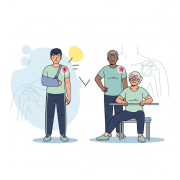
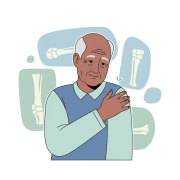
- The shoulder is a complex joint made up of three bones (clavicle, scapula, and humerus) and three joints (glenohumeral, acromioclavicular, and scapulothoracic).
- The rotator cuff muscles stabilize the shoulder joint.
- The brachial plexus innervates the shoulder and arm.
Elbow and Forearm:
- The elbow is a hinge joint that allows for flexion and extension, as well as pronation and supination of the forearm.
- Ligaments provide stability to the elbow joint.
- Muscles in the forearm control wrist and finger movements.
- The median, ulnar, and radial nerves innervate the forearm and hand.
Hand and Wrist:
- The wrist is made up of carpal bones, and the hand consists of metacarpals and phalanges.
- Ligaments and the carpal tunnel provide structure and support to the wrist and hand.
- Intrinsic and extrinsic muscles control hand and finger movements.
- The radial, median, and ulnar nerves provide sensation and motor function to the hand.
Hip and Thigh:
- The hip joint is a ball-and-socket joint that allows for a wide range of motion.
- Ligaments and the acetabular labrum stabilize the hip joint.
- Muscles of the hip and thigh control flexion, extension, abduction, adduction, and rotation.
- The femoral and sciatic nerves innervate the hip and thigh.
Knee and Leg:
- The knee is a hinge joint that allows for flexion and extension.
- Ligaments, including the ACL, PCL, MCL, and LCL, provide stability to the knee.
- Muscles of the thigh and leg control knee movement.
- The popliteal artery and the tibial and peroneal nerves are important structures in the knee and leg.
Foot and Ankle:
- The ankle joint is formed by the tibia, fibula, and talus.
- Ligaments stabilize the ankle and foot.
- Extrinsic and intrinsic muscles control foot and ankle movements.
- The tibial, peroneal, and other nerves provide sensation and motor function to the foot and ankle.
Spine:
- The spine is made up of 24 vertebrae, organized into cervical, thoracic, lumbar, and sacral regions.
- Ligaments and intervertebral disks provide stability and cushioning to the spine.
- Muscles around the spine control posture and movement.
- The spinal cord and nerve roots are housed within the spinal column.
The chapter emphasizes the importance of understanding the relationships between bones, joints, ligaments, muscles, nerves, and blood vessels in each region of the body. This knowledge is crucial for diagnosing and treating injuries and conditions affecting these areas.