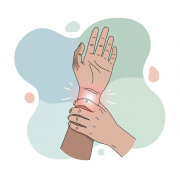
Dupuytren’s Contracture Treatment Options

Dupuytren’s Contracture: A Comprehensive Review of Management Options
Dupuytren’s contracture is a hand condition that affects the fascia, the layer of fibrous tissue beneath the skin of the palm and fingers 1. It causes the fascia to thicken and tighten, forming cords and nodules that can pull the fingers into a bent position. While this can cause discomfort, it is not typically associated with severe pain 2. This can make it difficult to perform everyday tasks such as grasping objects, opening jars, or buttoning clothes 3. While there is no cure for Dupuytren’s contracture, various management options are available to help alleviate symptoms and improve hand function. This article provides a comprehensive review of these options, including non-surgical treatments and surgical procedures.
Non-Surgical Treatments
Non-surgical treatments are often the first line of management for Dupuytren’s contracture, especially in the early stages. These treatments aim to slow the progression of the condition, reduce pain, and improve hand function. Some common non-surgical options include:
- Observation: If the disease progresses slowly, causes no pain, and has little impact on your ability to use your hands for everyday tasks, you might not need treatment. Instead, you can wait to see if Dupuytren’s contracture progresses. You may wish to follow the progression with a tabletop test, which you can do on your own 4. The tabletop test involves placing your hand palm down on a flat surface and seeing if you can keep your palm and fingers flat against the tabletop. If you can’t fully flatten your hand, it may indicate the presence of Dupuytren’s contracture.
- Physical therapy and stretching exercises: These can help maintain flexibility and range of motion in the affected fingers 5.
- Splinting: While splinting may not prevent the progression of Dupuytren’s contracture, it can help maintain finger extension and improve hand function 6.
- Steroid injections: Corticosteroids are powerful anti-inflammatory medications that can be injected into a painful nodule to help reduce symptoms 6. Steroid injections may be beneficial for some people with painful nodules and cords in the palm, but only if there is no contracture or loss of function 2. In some cases, steroid injections may slow the progression of the condition but won’t help straighten your finger if you already have a contracture 7.
- Biologic drugs: In some cases, injection of a biologic drug, which suppresses the immune system, may be helpful 2.
- Radiation therapy: Low-energy radiation therapy may help slow the progression of Dupuytren’s contracture and reduce the need for surgery 8. NICE guidelines advise that radiotherapy in this situation seems to be a safe treatment 2. Some people develop side effects following treatment, such as dry skin on the hands 2.
- Ultrasonic or heat treatments: These can increase the flexibility of the fascia and reduce stiffness 10. Heat treatments, such as warm compresses or paraffin wax baths, can soften the thickened tissue and enhance the effects of physical therapy 10.
- Collagenase injections: Collagenase clostridium histolyticum (CCH) is an FDA-approved injectable treatment for adults with Dupuytren’s contracture when a “cord” can be felt 11. Xiaflex is one brand of collagenase, but it is not available in all regions. The manufacturer decided to withdraw Xiaflex from Europe, Asia, and Australia in 2020, although this was not due to safety or efficacy concerns 7. Collagenase treatment is a two-step process 6. First, the cord is injected with the medication. The medication is then allowed to work for 2 to 3 days 6. Then, at a separate visit, the finger is manipulated (moved in a controlled way by the doctor) until the cord ruptures 6.
- Needle aponeurotomy: This minimally invasive procedure involves using a needle to puncture and break the cord of tissue that’s contracting a finger 4. This is done in the office setting instead of the operating room 4. Contractures often recur, but the procedure can be repeated 4.
Surgical Procedures
When non-surgical treatments fail to provide adequate relief or when the contracture is severe, surgical intervention may be necessary. The goal of surgery is to remove or break apart the cords that are pulling the fingers toward the palm, thereby improving hand function and range of motion. Some common surgical procedures include:
Fasciectomy: This is the most common surgical treatment for Dupuytren’s contracture 8. It involves surgically removing the thickened and contracted fascia 1. There are different types of fasciectomy:
Segmental (partial) fasciectomy: The surgeon makes a few small incisions in the natural creases of your hand and removes a short section of the affected tissue cord 12.
- Subtotal palmar fasciectomy: The surgeon makes several incisions (often in a zigzag pattern) along the creases in your palm and fingers and removes as much diseased tissue as possible 12.
- Dermofasciectomy: This involves removing diseased fascia tissue along with some of the skin from your palm 12. This procedure is often used for recurrent Dupuytren’s contracture 3. In these cases, a skin graft is needed to cover the open wound 4.
Fasciotomy: In this procedure, the surgeon makes an incision in your palm and divides the thickened cord(s) of tissue 6.
Needle fasciotomy: A needle is inserted into several places along your palm and finger to loosen and straighten it 3.
Amputation: In severe, recurrent cases, amputation of the affected finger may be recommended 13. Dupuytren’s contracture may recur in an amputation stump and require further treatment 13.
Hydrodissection: This is a technique used in conjunction with other procedures, such as fasciectomy, to separate the cord from surrounding tissues 14. In this procedure, fluid is injected to separate the cord from surrounding tissues, making it easier to remove.
Comparative Studies and Patient Testimonials
Several studies have compared the effectiveness of different treatment options for Dupuytren’s contracture. One study found that collagenase injection resulted in a significantly lower degree of deformity correction, lower rate of resolution, and increased rate of recurrence when compared with open fasciectomy 15. Another study, however, found that collagenase was not inferior to limited fasciectomy with respect to patient-reported outcomes at one year post-treatment 16. A meta-analysis found that short- and medium-term improvement to joint movement achieved with CCH were similar to those achieved with fasciectomy, although fasciectomy did outperform CCH with regard to treatment of PIP joint contractures 17.
Patient testimonials provide valuable insights into the experiences of individuals who have undergone different treatments for Dupuytren’s contracture. One patient, who had undergone three open surgeries for Dupuytren’s contracture, was pleased with the results of needle aponeurotomy, stating that he was able to garden two days after the procedure 18. Another patient, who had previously undergone two successful Dupuytren’s surgeries, found needle aponeurotomy to be “miraculous,” noting that he was able to drive himself home and use his hand right away 18. Some patients who have undergone surgery express satisfaction with the long-term results, while others note the challenges of recovery and the possibility of recurrence 19. One patient who underwent surgery advised others to “listen and follow the post-op instructions” and to “do the exercises” and “wear a splint” as instructed 19.
Choosing the Right Treatment
The choice of treatment for Dupuytren’s contracture depends on several factors, including the severity of the contracture, the affected fingers, the patient’s overall health, and their preferences. It’s essential to discuss the pros and cons of each option with a healthcare professional to determine the most appropriate treatment plan. If you do need treatment, it is best done earlier rather than later 2.
| Treatment | Pros | Cons | Recovery Time | Potential Complications | Cost | Stage |
|---|---|---|---|---|---|---|
| Observation | No invasiveness, no downtime | May not be suitable for all cases | None | None | None | Early |
| Physical therapy | Non-invasive, can improve range of motion | May not be effective in advanced cases | Varies | Muscle soreness | Varies | Early |
| Splinting | Non-invasive, can help maintain finger extension | May not prevent disease progression | None | Skin irritation | Low | Early |
| Steroid injections | Can reduce pain and inflammation | May have limited long-term effectiveness | Minimal | Pain, swelling, tendon rupture | Moderate | Early |
| Biologic drugs | May suppress the immune system and slow progression | May have side effects | Minimal | Injection site reactions, immune suppression | High | Early |
| Radiation therapy | Non-invasive, may slow disease progression | May have potential long-term risks | Minimal | Skin irritation, theoretical risk of cancer | Moderate | Early |
| Collagenase injections | Minimally invasive, quicker recovery than surgery | May have higher recurrence rates than surgery | 1-2 weeks | Pain, swelling, bruising, tendon rupture | High | Moderate |
| Needle aponeurotomy | Minimally invasive, quicker recovery than surgery | May have higher recurrence rates than surgery | 1-2 weeks | Skin tears, nerve or tendon injury | Moderate | Moderate |
| Fasciectomy | More complete and longer-lasting correction | More invasive, longer recovery time | 6-12 weeks | Infection, nerve damage, stiffness | High | Severe |
| Fasciotomy | Less invasive than fasciectomy | Higher recurrence rates than fasciectomy | 4-12 weeks | Bleeding, numbness, infection | Moderate | Moderate |
| Needle fasciotomy | Less invasive than fasciectomy | Higher recurrence rates than fasciectomy | Up to 2 weeks | Cut opening in skin, pain, numbness | Moderate | Moderate |
Healthcare Professionals Involved
The management of Dupuytren’s contracture often involves a multidisciplinary team of healthcare professionals, including:
- Hand surgeons: These specialists are trained in the surgical treatment of hand conditions, including Dupuytren’s contracture. They perform procedures such as fasciectomy, fasciotomy, and needle fasciotomy.
- Plastic and reconstructive surgeons: These surgeons may be involved in more complex cases of Dupuytren’s contracture, particularly those requiring skin grafts or extensive reconstruction.
- Orthopaedic hand surgeons: These specialists have expertise in both the surgical and non-surgical management of hand conditions, including Dupuytren’s contracture.
- Physical therapists: Physical therapists play a crucial role in the rehabilitation process after surgery or non-surgical treatments. They help patients regain strength, range of motion, and hand function through exercises and other therapies.
Conclusion
Dupuytren’s contracture is a challenging condition that can significantly impact hand function. Fortunately, various management options are available to help patients regain mobility and improve their quality of life. The choice of treatment depends on several factors, including the severity of the contracture and patient preferences. Non-surgical options, such as steroid injections and collagenase injections, may be suitable for patients with early-stage or mild contractures. For those with more severe contractures, surgery may be necessary to achieve optimal outcomes. It is important to remember that seeking treatment earlier rather than later can lead to better outcomes and potentially simplify the treatment process. By carefully considering the available treatments and working closely with a healthcare professional, individuals with Dupuytren’s contracture can make informed decisions about their care and achieve the best possible outcomes.
Works cited
1. Fasciectomy for Dupuytren’s Contracture: What to Expect at Home, accessed February 17, 2025, https://myhealth.alberta.ca/Health/aftercareinformation/pages/conditions.aspx?hwid=ud1629
2. Dupuytren’s Contracture | Causes & Treatment – Patient.info, accessed February 17, 2025, https://patient.info/bones-joints-muscles/dupuytrens-contracture-leaflet
3. Dupuytren’s contracture – NHS, accessed February 17, 2025, https://www.nhs.uk/conditions/dupuytrens-contracture/
4. Dupuytren contracture – Diagnosis and treatment – Mayo Clinic, accessed February 17, 2025, https://www.mayoclinic.org/diseases-conditions/dupuytrens-contracture/diagnosis-treatment/drc-20371949
5. Dupuytren Contracture: Causes, Symptoms & Treatment – Cleveland Clinic, accessed February 17, 2025, https://my.clevelandclinic.org/health/diseases/16941-dupuytrens-contracture
6. Dupuytren’s Disease – Dupuytren’s Contracture – OrthoInfo – AAOS, accessed February 17, 2025, https://orthoinfo.aaos.org/en/diseases–conditions/dupuytrens-disease/
7. Collagenase for Dupuytren, accessed February 17, 2025, https://dupuytrens-society.org.uk/treatment-2/dupuytrens-disease/collagenase-clostridium-histolyticum/
8. Dupuytren’s Contracture | Johns Hopkins Medicine, accessed February 17, 2025, https://www.hopkinsmedicine.org/health/conditions-and-diseases/dupuytrens-contracture
9. Dupuytren’s Contracture Treatments – Medical Clinical Policy Bulletins – Aetna, accessed February 17, 2025, https://www.aetna.com/cpb/medical/data/800_899/0800.html
10. Patient Stories – Eatontown, NJ & Toms River, NJ – Central Jersey Hand Surgery, accessed February 17, 2025, https://www.centraljerseyhand.com/contents/testimonials/patient-stories
11. About XIAFLEX® for Dupuytren’s Contracture, accessed February 17, 2025, https://dupuytrens-contracture.xiaflex.com/patient/about-xiaflex/
12. Fasciectomy (for Dupuytren’s Disease): Surgery, Procedure & Recovery – Cleveland Clinic, accessed February 17, 2025, https://my.clevelandclinic.org/health/treatments/22660-fasciectomy
13. Treatment Options for Dupuytren’s Disease: Tips and Tricks – PMC – PubMed Central, accessed February 17, 2025, https://pmc.ncbi.nlm.nih.gov/articles/PMC8849405/
14. Surgery for Dupuytren’s contracture of the fingers – PMC – PubMed Central, accessed February 17, 2025, https://pmc.ncbi.nlm.nih.gov/articles/PMC6464957/
15. A 10-Year Review of Collagenase Versus Fasciectomy in the Treatment of Dupuytren Contracture – PubMed, accessed February 17, 2025, https://pubmed.ncbi.nlm.nih.gov/38717148/
16. Collagenase Injection versus Limited Fasciectomy for Dupuytren’s Contracture – PMC, accessed February 17, 2025, https://pmc.ncbi.nlm.nih.gov/articles/PMC7616701/
17. Dupuytren Contracture Treatment & Management: Approach Considerations, Rehabilitation, Collagenase Injection – Medscape Reference, accessed February 17, 2025, https://emedicine.medscape.com/article/329414-treatment
18. Patient Testimonials | Needle Aponeurotomy Hand Surgery for Dupuytren’s Contracture, accessed February 17, 2025, https://www.needleaponeurotomy.com/patient-resources/patient-testimonials/
19. Dupuytren’s contracture – Terri Hall patient story – Florida Orthopaedic Institute, accessed February 17, 2025, https://www.floridaortho.com/news/dupuytrens-contracture-terri-hall-patient-story/